Veneers vs Bonding: Which Cosmetic Dental Option Is Best?
Veneers vs Bonding: Which Cosmetic Dental Option Is Best?
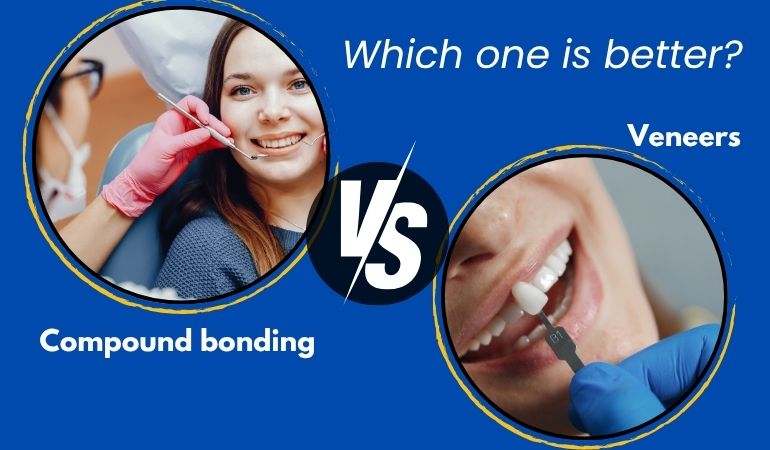
Still debating between veneers vs bonding and which option is right for your smile?
Everyone wants white, pretty-looking teeth. A beautiful smile shows confidence and character. Unfortunately, teeth can chip, stain, become uneven, or wear down over time. That’s when people turn to cosmetic dental procedures. The most common of these are veneers and bonding.
When comparing veneers vs bonding, you should understand how each treatment works. Then, you can choose the option that best fits your needs.
What Are Veneers?
A veneer is a thin layer that sits on the surface of your tooth. Dentists usually make customized veneers from porcelain to enhance the shape and appearance of your teeth.
Veneers address multiple issues, including discolorations, minor gaps between teeth, and misshapen teeth.
Additionally, porcelain veneers have a natural appearance. Hence, they are more resistant to staining compared to most other dental aesthetics.
What Is Bonding?
The bonding procedure involves a tooth-colored resin substance that is applied to the tooth by the dentist and molded into shape. Afterward, a light is used to harden the resin.
Bonding is an option that can be used to repair any damage, such as chipped teeth, cracks, small gaps, and discolorations.
It should also be noted that bonding requires less time than veneers.
Veneers vs Bonding: Major Differences
Both treatments improve smiles, but there are several differences.
Appearance
Porcelain veneers are more polished than other methods. They resemble natural teeth by reflecting light just like them.
On the contrary, bonding is quite similar to the appearance of natural teeth. Nonetheless, this method might not have the same shine as porcelain veneers.
Durability
Porcelain veneers are extremely durable materials that can withstand various situations for up to ten to fifteen years and even more.
Comparatively, bonding lasts for three to ten years only.
Cost
Veneers usually cost more because dentists have to customize them as per the patient’s needs.
Conversely, bonding is less expensive. It may therefore be the preferred option if you are on a tight budget.
Treatment Time
The bonding procedure is usually completed in one visit.
Whereas, veneers often require more than two visits. During these visits, the dentist will prepare the teeth and place the usual veneer.
Benefits of Veneers
There are various advantages to using veneers.
* They give you a natural-looking smile.
* It does not stain easily.
* Veneers can last for years.
* and lastly, it helps improve the appearance of multiple teeth together.
Thus, due to all these factors, people prefer to get veneers as a full smile makeover solution.
Benefits of Bonding
Bonding also has several other advantages.
* It is inexpensive.
* Tooth preparation is minimal.
* The procedure can be done in a single visit.
* Bonding fixes minor defects in a short time.
Hence, bonding is affordable and budget-friendly yet still serves the purpose.
Which Option Is Best for You? Veneers vs Bonding
Your goals will help you choose the right treatment. If you want a durable and cosmetic change, veneers could be a better option. However, if you want a faster and more affordable solution, you may choose bonding instead.
What is even more important is that a dentist could help you to know which treatment is appropriate for you.
Conclusion
As far as veneers vs bonding is concerned, both treatments serve as great ways of giving you a perfect smile. Although veneers give the benefit of longevity, bonding is faster and cheaper. If you are looking for more than fixing your smile, go for the dental crown and bridge service.